
For public-sector IT and integrators
One form schema for portal, workflow and specialist system.
Read structured application data, embed forms, submit applications via API and pass cases to specialist systems. With documented OpenAPI and clear authentication profiles.
For public-sector IT and integrators
Typical tasks.
- Connect forms and cases via a documented HTTP API
- Embed forms securely in existing portals
- Forward submissions via webhook or outbox to target systems
- Expose forms as MCP tools for AI assistants
- Integrate SSO via the authority's identity provider
API-first
One form schema. One API contract. Many clients.
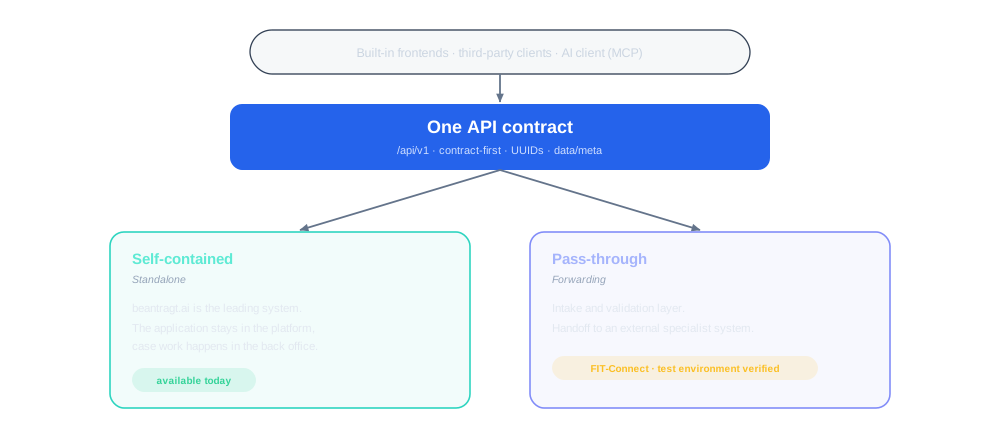
The beantragt.ai interface is the first client on a documented HTTP API. Public-sector portals, specialist-system adapters, webhooks, MCP clients and AI assistants can use the same contract. Public resources use UUIDs, slugs or tokens, not internal IDs.
OpenAPI specification
Example requests
Forms and applications via REST
MCP for AI assistants
Form embedded in an external portal
Any published form can be embedded in existing portals. The citizen journey stays where users expect it.
Embed configuration and allowed domains
Allowed domains, post-submission redirect and appearance are controlled per form. Embedding stays auditable.
Submission in embed with case reference
A submission in the embedded form creates the same case as the native interface, including case reference and status.
SSO and login
SAML 2.0 SP for eIDAS / EUDI Wallet, ADFS or Entra. The authority brings its IdP; beantragt.ai provides the connection logic.
The UI is one client. Portals, adapters and AI assistants can use the same contract.
Public resources use UUIDs, slugs or tokens, no internal database IDs.
Also of interest